
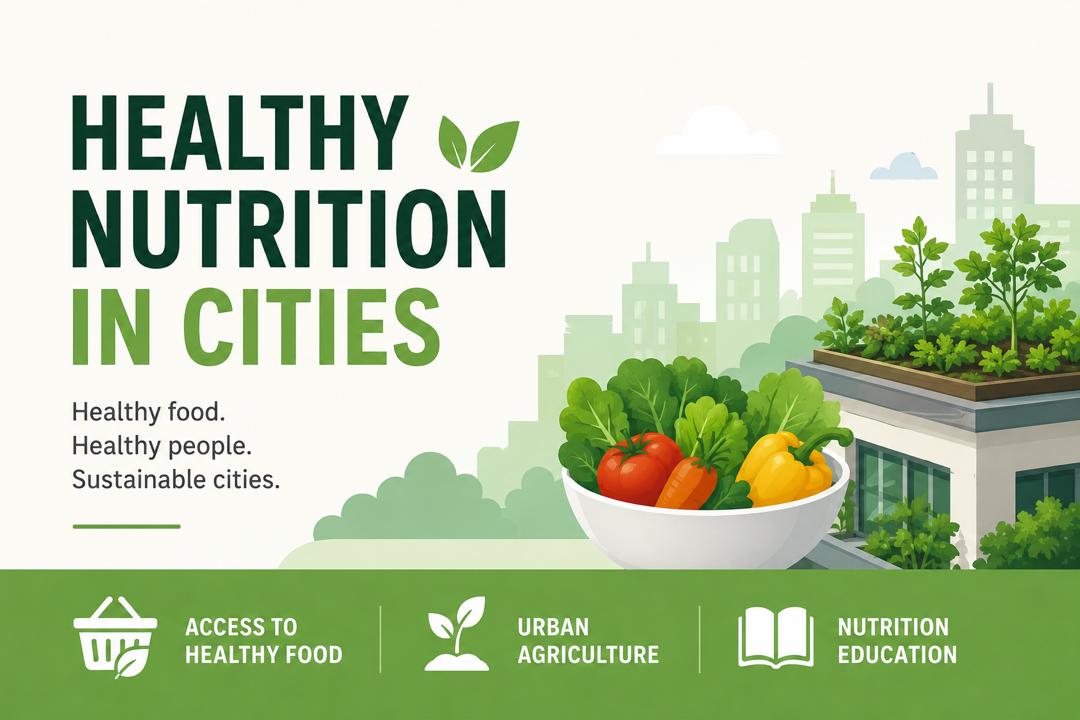
Healthy Nutrition in Cities: Access to Healthy and Affordable Food, Promotion of Urban Agriculture, and Nutrition Education
The rapid growth of urbanization in recent decades has significantly transformed dietary patterns among urban residents. Increased consumption of processed foods, reduced physical activity, and limited access to healthy food options are among the most important challenges to urban health. In this context, equitable access to healthy and affordable food, the development of urban agriculture, and the enhancement of nutritional literacy can play a vital role in improving public health and reducing non-communicable diseases. This article examines various dimensions of healthy nutrition in cities and proposes strategies for developing sustainable urban food systems.
Keywords: Healthy Nutrition, Urban Health, Urban Agriculture, Food Security, Nutrition Education, Sustainable Development
1. Introduction
Cities, as the primary centers of human settlement, play a decisive role in the physical and mental well-being of citizens. According to international reports, more than half of the world’s population lives in urban areas, and this figure continues to rise. One of the most significant consequences of urbanization is the transformation of lifestyles and dietary habits.
The growing consumption of high-calorie foods, fast foods, and sugary beverages has contributed to an increase in obesity, diabetes, cardiovascular diseases, and certain types of cancer. Furthermore, many low-income urban households face limited access to healthy foods due to the rising cost of living. Therefore, creating cities with sustainable food systems is considered a fundamental pillar of sustainable urban development.
2. The Concept of Healthy Nutrition in Urban Environments
Healthy nutrition refers to the balanced consumption of essential food groups, including:
•Fresh fruits and vegetables
•Whole grains
•Low-fat dairy products
•Healthy protein sources
•Adequate water intake
In urban environments, healthy nutrition is not merely an individual choice; it is influenced by several factors, including:
•Household economic conditions
•Geographic access to healthy foods
•Food culture
•Urban policies
•Public education and awareness
3. Access to Healthy and Affordable Food
3.1 Importance of Food Accessibility
Food security is achieved when all individuals have access at all times to sufficient, safe, and nutritious food. In many cities, underserved neighborhoods lack adequate access to stores that provide healthy food options.
This situation leads to the emergence of what is known as a “food desert,” where residents are forced to rely on ready-made and nutritionally poor food products.
3.2 Existing Challenges
The most significant challenges to accessing healthy food include:
•Rising prices of fruits and vegetables
•Unequal distribution of food supply centers
•Dependence on processed foods
•Reduced purchasing power of households
•Extensive marketing of unhealthy foods
3.3 Proposed Solutions
Municipalities and governments can improve access to healthy food through the following measures:
•Establishing local farmers’ markets
•Supporting stores that offer healthy food products
•Providing subsidies for essential food items
•Developing direct producer-to-consumer distribution systems
•Monitoring and regulating prices of basic food products
4. The Role of Urban Agriculture in Public Health
4.1 Concept of Urban Agriculture
Urban agriculture refers to food production activities within or around cities, including:
•Home gardens
•Community gardens
•Urban greenhouses
•Rooftop farming
•Vertical farming systems
4.2 Benefits of Urban Agriculture
A. Enhancing Food Security
Producing food within cities reduces dependence on long and vulnerable food supply chains.
B. Reducing Household Expenses
Citizens can produce part of their own vegetables and food requirements, lowering food costs.
C. Improving Mental Health
Gardening activities contribute to reducing stress, anxiety, and depression.
D. Enhancing the Urban Environment
Urban agriculture helps:
•Increase green spaces
•Reduce air pollution
•Absorb carbon dioxide
•Mitigate the urban heat island effect
E. Strengthening Social Participation
Community gardens create opportunities for social interaction and cooperation among residents.
5. Nutrition Education: The Foundation of Dietary Behavior Change
5.1 Importance of Nutrition Education
Even when healthy food is available, improvements in dietary habits cannot be expected without adequate awareness and knowledge.
Nutrition education helps individuals:
•Make informed food choices
•Understand food labels
•Reduce excessive consumption of sugar, salt, and fat
•Maintain balanced diets
5.2 Target Groups for Nutrition Education
Children and Adolescents
Early education helps establish healthy eating habits that continue into adulthood.
Parents
Parents play a central role in shaping family dietary patterns.
Older Adults
Nutrition education can help prevent chronic diseases and malnutrition among the elderly.
Employees and Workers
Educational programs in workplaces contribute to improving workforce health and productivity.
6. The Role of Urban Management in Promoting Healthy Nutrition
Municipalities can create favorable conditions for healthy nutrition through urban planning and policy-making.
Key measures include:
•Establishing local healthy food markets
•Expanding urban gardens
•Allocating unused land for urban agriculture
•Implementing nutrition education campaigns
•Developing healthy school cafeterias
•Supporting local food producers
•Encouraging restaurants to provide healthier meal options
7. Successful International Experiences
Singapore
Singapore has developed vertical farming systems that enable the country to produce part of its food needs despite limited land availability.
Canada
Many Canadian cities have implemented community garden programs that contribute to food security and social participation.
Netherlands
The Netherlands has become a global leader in sustainable food production through the application of advanced urban agricultural technologies.
Germany
Many German cities integrate urban gardening projects into their public health and sustainability policies.
8. The Impact of Healthy Nutrition on Sustainable Urban Development
Healthy nutrition contributes not only to individual well-being but also to broader sustainability goals, including:
•Reducing healthcare expenditures
•Increasing workforce productivity
•Reducing food poverty
•Promoting social equity
•Enhancing quality of life
•Protecting the environment
•Strengthening urban resilience
Therefore, sustainable food systems are recognized as a key component of future sustainable cities.
9. Conclusion
Healthy nutrition in cities is not merely a public health issue but a strategic component of sustainable urban development. Equitable access to healthy and affordable food, the promotion of urban agriculture, and continuous nutrition education can significantly improve public health, reduce non-communicable diseases, and enhance citizens’ quality of life. Municipalities, governments, educational institutions, and civil society organizations must collaborate to establish sustainable and healthy urban food systems, ensuring that future cities achieve not only economic growth but also greater health, well-being, and social prosperity.
References
1.World Health Organization (WHO). Healthy Diet Guidelines.
2.Food and Agriculture Organization (FAO). Urban Food Systems and Nutrition Reports.
3.United Nations (UN). Sustainable Development Goals.
4.Urban Agriculture: Urban Food Production Studies.
5.UN-Habitat. Urban Health and Food Security Reports.