
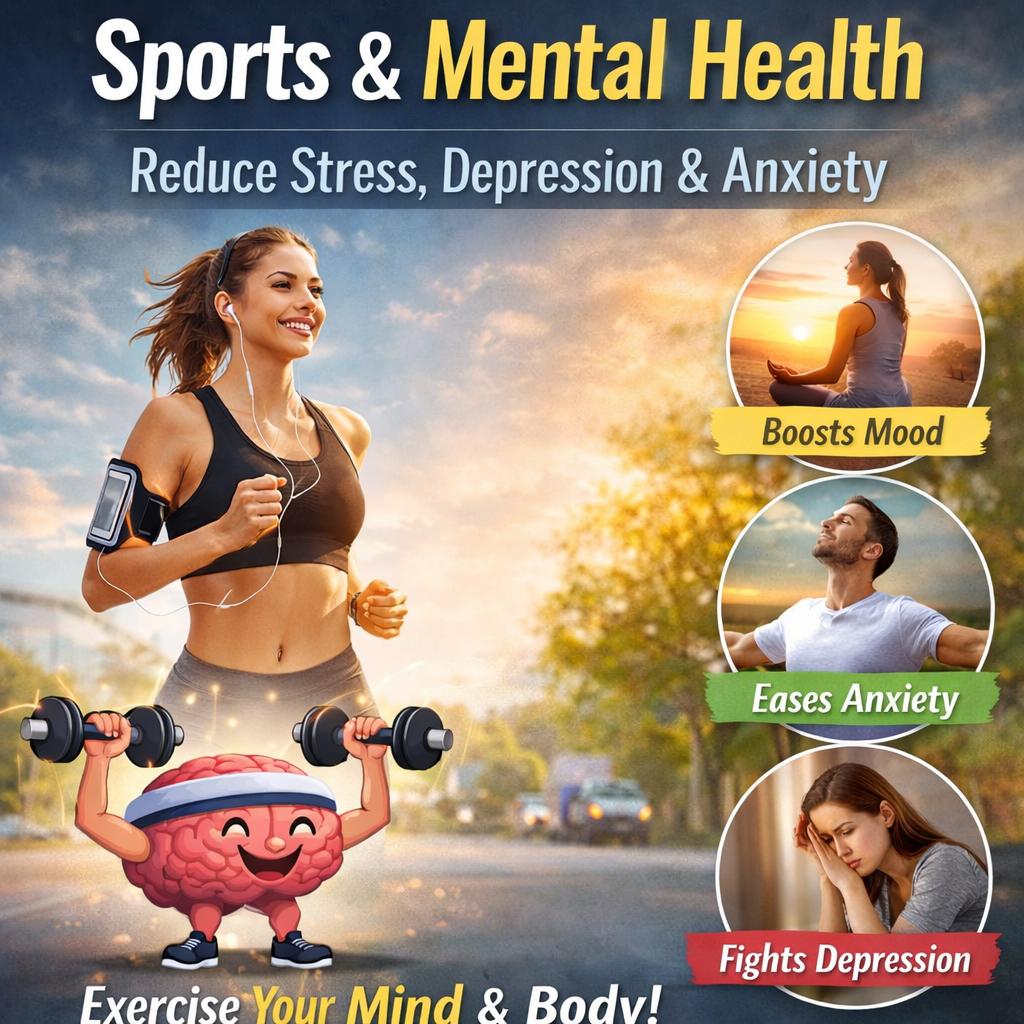
Sports and Mental Health: How Physical Activity Helps Reduce Stress, Depression, and Anxiety
In recent years, mental health has received as much attention as physical health. Work pressure, family issues, economic problems, and social changes have contributed to increased levels of stress, depression, and anxiety in modern life. However, one of the most effective and accessible strategies to cope with these challenges is regular physical activity and exercise.
Exercise and Stress Reduction
Physical activity triggers the release of endorphins and serotonin—natural chemicals in the brain responsible for feelings of happiness and relaxation. Moreover, exercise helps reduce cortisol, the hormone associated with stress. Just 30 minutes of brisk walking can improve heart rate, calm the mind, and distract us from negative thoughts.
The Role of Exercise in Fighting Depression
Research shows that exercise can, in some cases, be as effective as antidepressant medication—without unwanted side effects. Activities such as cycling, swimming, yoga, or even dancing can:
•Boost energy levels
•Increase motivation
•Help individuals feel purposeful
Group sports also enhance social interaction and reduce isolation, which are crucial for combating depression.
Exercise and Anxiety Reduction
During anxiety, the body experiences muscle tension and increased heart rate. Exercise helps relax muscles and balance the nervous system. Practices like yoga, breathing exercises, and stretching have direct effects on lowering anxiety levels.
Additional Mental Health Benefits of Exercise
Beyond reducing stress, depression, and anxiety, regular physical activity can:
•Enhance self-confidence
•Improve sleep quality
•Strengthen memory
•Increase concentration
•Improve social relationships
All of which contribute to better mental well-being.
When Does Exercise Work Best?
The good news is that you don’t need intense workouts to benefit. Simple activities such as:
•Daily walking
•Light jogging
•Home workouts
•Yoga and stretching
•Recreational sports
can provide both short-term and long-term results.
Conclusion
Exercise is not just a tool for fitness; it is a powerful pathway to improved mental health and a better quality of life. By incorporating at least 30 minutes of daily physical activity, one can enjoy both physical and psychological benefits and live a more positive and balanced life.