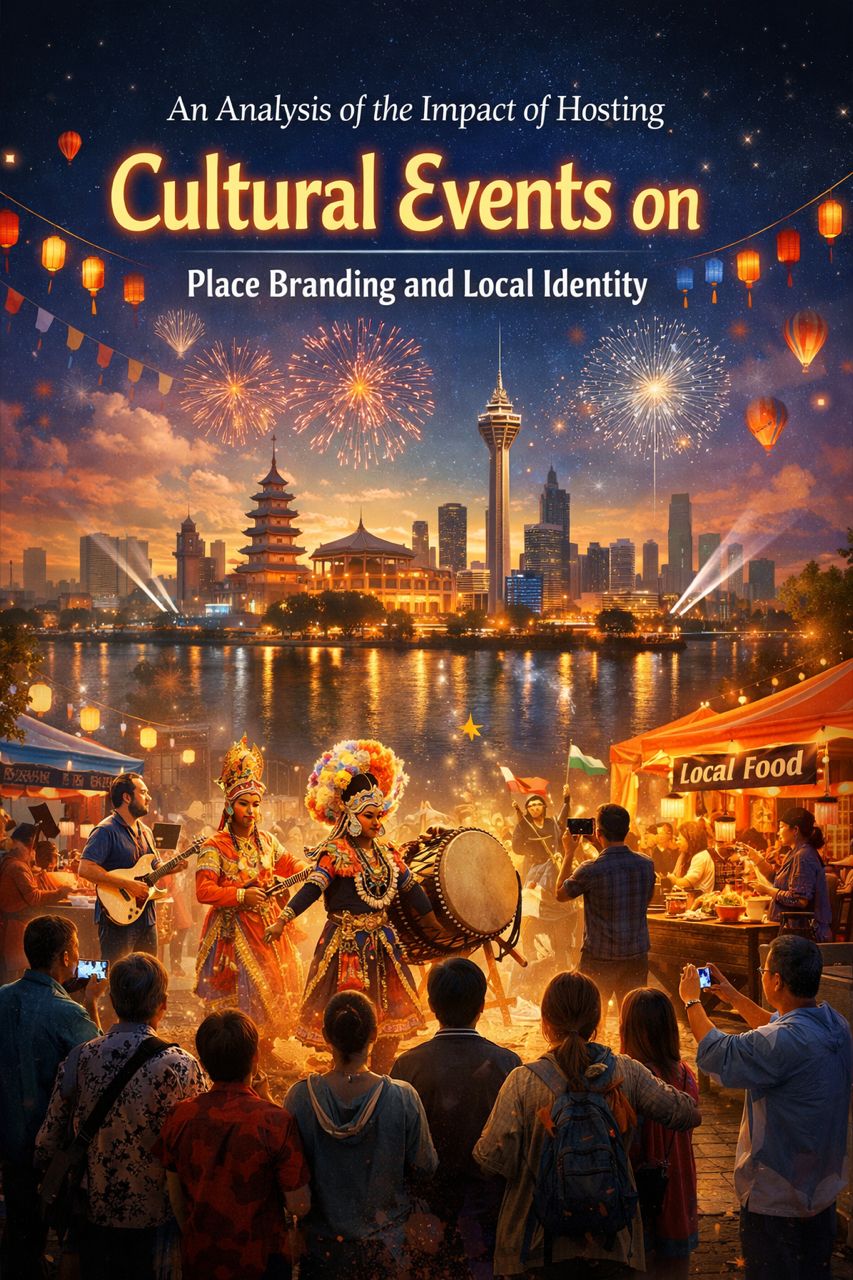
An Analysis of the Impact of Hosting Cultural Events on Place Branding and Local Identity
Introduction
In today’s competitive urban and regional environment, place branding has become a strategic tool for sustainable development. Cities are no longer defined solely by their physical infrastructure; rather, their cultural image, symbolic meaning, and lived experiences play a crucial role in shaping perceptions among residents, visitors, investors, and policymakers. In this context, hosting cultural events has emerged as a powerful mechanism for strengthening place branding and reinforcing local identity.
Concept of Place Branding and Local Identity
Place branding refers to the strategic process of creating, managing, and communicating the identity and image of a place to its target audiences. Local identity, on the other hand, is rooted in the historical background, cultural values, traditions, social practices, and collective memory of a community. The interaction between place branding and local identity ensures that branding efforts remain authentic, credible, and sustainable.
Cultural Events as Strategic Branding Tools
Cultural events—including festivals, heritage celebrations, art exhibitions, music performances, gastronomy events, and culture-based sport events—provide unique opportunities to showcase the distinctive character of a city or region. These events:
- Offer authentic cultural experiences
- Create emotional connections between visitors and the host community
- Generate media visibility and digital engagement
- Shape long-term perceptions and collective memories
As a result, place branding is strengthened not through slogans, but through meaningful cultural experiences.
Impact of Cultural Event Hosting on Local Identity
Well-planned cultural events contribute significantly to the preservation and revitalization of local identity. They help:
- Strengthen citizens’ sense of belonging
- Revive traditional practices and intangible cultural heritage
- Encourage community participation and social cohesion
- Enhance local pride and cultural confidence
For emerging cities and less-recognized regions, cultural events serve as an effective platform for redefining identity and increasing visibility at national and international levels.
Cultural Events and Sustainable Urban Tourism
Hosting cultural events plays a key role in promoting sustainable and experience-based urban tourism. Unlike mass tourism, cultural event tourism:
- Diversifies tourism seasons
- Reduces environmental pressure through localized activities
- Supports local businesses and creative industries
- Ensures a fairer distribution of economic benefits
In this regard, cultural events complement urban sports tourism initiatives and contribute to the broader goals of sustainable city development.
Challenges and Requirements for Success
Despite their advantages, cultural events may pose challenges if not strategically managed, such as:
- Over-commercialization of local culture
- Limited involvement of local communities
- Short-term impacts without lasting legacy
To overcome these challenges, successful cultural event hosting requires:
- Active participation of local stakeholders and citizens
- Alignment with the authentic identity of the host location
- Long-term planning and post-event impact assessment
Role of Urban Governance and International Organizations
Municipal authorities, urban managers, and international organizations—particularly those active in the fields of sports, culture, and urban tourism—play a critical role in shaping effective event strategies. Through policy coordination, capacity building, and international knowledge exchange, these institutions can maximize the social, cultural, and branding impacts of cultural events.
Conclusion
Hosting cultural events represents a strategic opportunity for enhancing place branding, reinforcing local identity, and supporting sustainable urban development. When designed with community engagement, cultural authenticity, and long-term vision, cultural events can transform cities into recognizable, attractive, and resilient destinations. The integration of culture, sport, and tourism within urban event strategies offers a sustainable pathway toward inclusive and identity-driven city development.